


Women At Work: Val-kill Industries
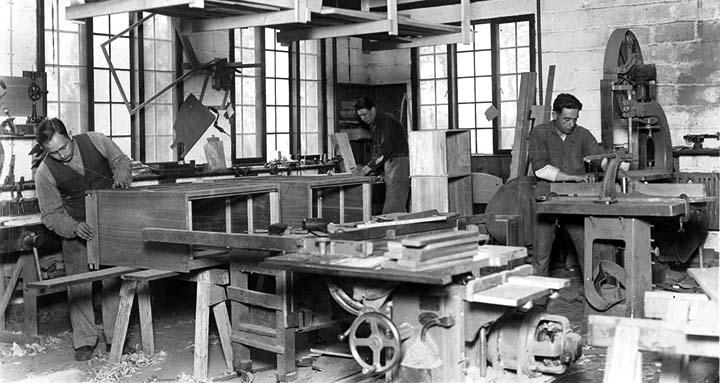
When the utopian ideals of the American Arts and Crafts movement began to splinter against the hard realities of a growing post-war industrial society, a fascinating cultural initiative was initiated by first lady Eleanor Roosevelt. Disheartened by the machine age but still yearning for a lasting connection to the handmade, she brought together a group of makers who redirected their focus toward a pastoral view of America’s colonial past.
By 1926, Val-Kill Industries—a bold partnership formed Mrs. Roosevelt together with Nancy Cook, Marion Dickerman, and Caroline O’Day, opened at the Roosevelt family estate in Hyde Park, New York. This groundbreaking initiative can now be appreciated at the Metropolitan Museum of Art, which just opened Cottage Industry: The Val-Kill Furniture Shop Above: Otto Berge, Arnold Berge, and Frank Landolfa in the Val-Kill Shop, ca. 1929. Credit: National Park Service
 At the heart of the workshop was co-founder Nancy Cook, a trained artisan whose background in woodcraft and draftsmanship shaped Val-Kill’s aesthetic and curriculum. As the managing partner, Cook translated historic pieces from The Met's decorative arts collection into workable blueprints.
She also served as the primary design instructor, teaching local apprentices the fundamentals of form and construction. To ground the students in precision technique, she enlisted several master craftsmen, including Italian craftsman Frank Landolfa, who brought vital vocational teaching experience from Greenwich Village settlement houses, and Norwegian cabinetmaker Otto Berge, whose rigorous European training elevated the shop’s joinery and finish.
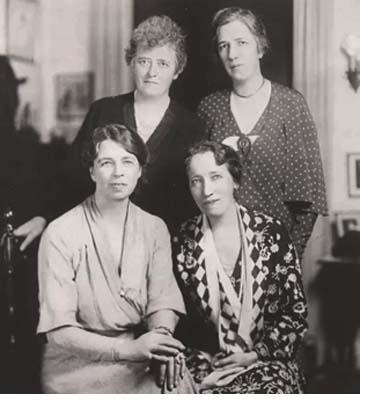
Together with Arnold Berge at the forge and weaver Nelly Johannesen in the textile studio, Cook and her team of instructors offered rural farmworkers the opportunity to become skilled artisans creating work for sale to supplement their income. In essence, this progressive social experiment in Hyde Park became a landmark in the American Arts and Crafts revival, whose leaders included Greene and Greene, Frank Lloyd Wright and Gustave Stickley. Left: Eleanor Roosevelt, Caroline O'Day, Nancy Cook, and Marion Dickerman, ca. 1928. NPS Photo.
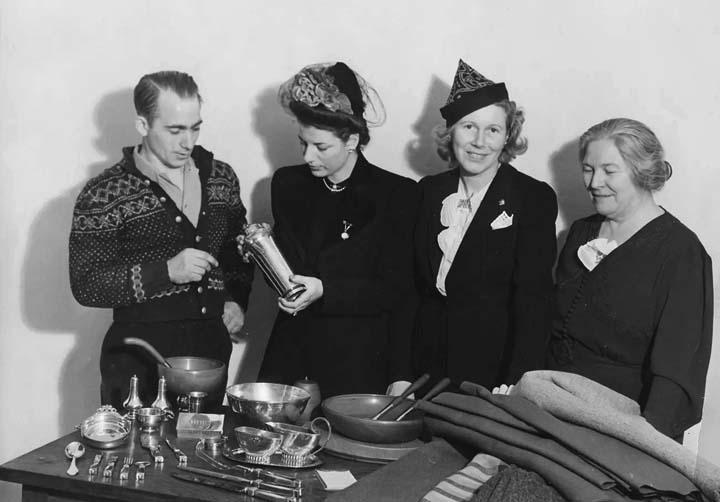
To sustain its progressive economic model, Val-Kill Industries marketed its premium furniture and pewter wares directly to affluent urban consumers through a mix of high-society showcases and targeted retail channels. A primary sales hub was the Roosevelt family townhouse at 49 East 65th Street in New York City, where Eleanor Roosevelt hosted exhibition sales that transformed the residence into a temporary sales hub. Beyond these private Manhattan salons, the workshop established a permanent, dedicated showroom on-site in Hyde Park, to capture the business of travelers and estate visitors. Above: Arnold Berge (left) and Nelly Johannesen (right) display pewter and wool cloth made at Val-Kill Industries. NPS Photo.
Because each piece required intensive manual labor, the items carried luxury price tags—often ranging from $12 to upwards of $500 [now $227 to $9,463]—and were positioned as heirloom-quality craftsmanship distributed via custom mail-order catalogs and premier department stores. This specialized network relied heavily on word-of-mouth recommendations within Roosevelt’s influential social and political circles, successfully bridging the gap between rural economic development and the decorative arts marketplace.
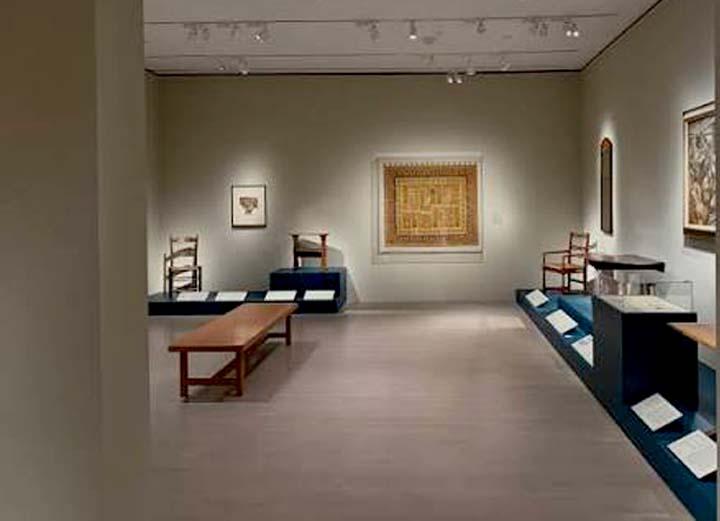
This exhibition [above] brings together over 30 works—including rare examples of Val-Kill furniture, including desks, chairs, and tables on loan from Roosevelt's Hyde Park home—paired with conceptual templates that lay bare the collaborative spirit of the workshop floor. The installation juxtaposes these pieces against the historic holdings of The Met’s American Wing, demonstrating how the museum’s early collections directly inspired Val-Kill's designs. Complemented by Arts and Crafts masterworks of Gustav Stickley and the nearby Byrdcliffe Colony, in Woodstock, as well as Depression-era prints and sculpture, the show offers an evocative look at how progressive political ideals can materialize successfully into wood, metalwork, and community empowerment.
Save the date, Friday, October 16, 6-7pm: Artists on Art with Aspen Golann, furniture maker, artist, educator, and Vacheron Constantin Artisan in Residence. Free with required registration
Through May 9, 2027 at The Met, 1000 Fifth Avenue, New York, NY Info