CNBC Tuesday September 15, 2026
OpenAI announced recently that its advertising business has hit $1 billion in annualized revenue run rate, a milestone that the company is touting as proof of its “diversified business model.” OpenAI began testing ads within its ChatGPT chatbot in the U.S. in February, a decision that was both highly anticipated and controversial, notes CNBC. Digital advertising has long been the cash cow for other big tech companies like Google and Meta, but OpenAI’s move was ridiculed by its chief rival, Anthropic. Read the full Story >>
The New York Times Tuesday September 15, 2026
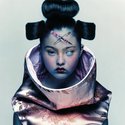
“In many art circles, fashion photography doesn’t always get the respect it deserves,” notes T, The New York Times Style Magazine, which convened a panel of experts to choose the 25 most influential fashion photographs. (The panel included, among others, supermodel Linda Evangelista and photo duo Vinoodh Matadin and Inez van Lamsweerde.) The chosen images include Richard Avedon’s 1980 photo of 15-year-old Brooke Shields for Calvin Klein and Nick Knight’s 1997 photo of model Devon Aoki for Visionaire magazine. Read the full Story >>
Mashable Tuesday September 15, 2026
Apple has unveiled the iPhone 18 Pro and iPhone 18 Pro Max, with starting prices of $1,199 and $1,299; the new iPhones will officially be released on Sept. 18. The new smartphones bring major camera upgrades, notes Mashable: The iPhone 18 Pro has a new 48-megapixel Fusion Main camera with variable aperture and, notes The Verge, a f/1.48 lens. “Given the relatively small sensor size in smartphones like iPhone 18 Pro, f/4 will offer very expansive depth of field,” notes PetaPixel. Read the full Story >>
By
David Schonauer Tuesday September 15, 2026
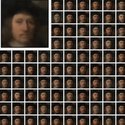
A new study from researchers at MIT's Computer Science and Artificial Intelligence Laboratory (CSAIL) suggests that the more data a generative model is trained on, the less likely an AI-generated
image is to be traced back to a source image. MIT professor David Gifford believes the results bear on the legal question of whether models' outputs are merely derivative works, with implications for
copyright. … Read the full Story >>