David Schonauer
feature shoot Wednesday October 9, 2013
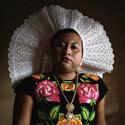
Before Spanish colonization brought Catholicism to Mexico, notes Feature Shoot, there were cross-dressing Aztec priests and hermaphrodite Mayan gods; gender flexibility was inherent in the culture.
Today that legacy can still be seen in the southern state of Oaxaca, where men who consider themselves women—called “muxes”—are not only accepted, but also celebrated as
symbols of good luck. Mexico City-based photographer Nicola “Ókin” Frioli has documented this culture in his series “We Are Princesses in a Land of Machos.” Read the full Story >>
By
Peggy Roalf Wednesday October 4, 2017
This week, The Nation, founded by abolitionists in 1865, launched a new series of artistic dispatches from the front lines of resistance. Spearheaded by celebrated artists and illustrators
Andrea Arroya, Steve Brodner, and Peter Kuper, OppArt will showcase fresh content daily online as a diverse group of artists take aim and draw. Launched on Monday with art by longtime DART
contributor, Peter Kuper, … Read the full Story >>
LensCulture Tuesday March 29, 2016
The winner of the Single Image prize in this year’s LensCulture Exposure awards comes from German/Slovenian photographer Vanja Bucan’s series “Camouflage,” which explores the
differences between photography and painting. Slovenian photographer Matej Povse takes second place with an image of refugees from Syria, while Mexican photographer Alejandra Lòpez-Zaballa wins
the third-place prize for an image made at an orphanage in Oaxaca. The work will be on view at London Photo 2016 (May 19 to 22). Read the full Story >>
Mark Holthusen Wednesday July 17, 2013
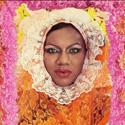
Muxe, pronounced ‘Mu-sha,’ is a Zapotec word for a third sex—a male individual who dresses and acts as a woman, notes San Francisco-based photographer Mark Holthusen, who first
learned of the subculture while researching another project in Mexico’s Oaxaca state. “I became fascinated by the elaborate traditional costumes,” he says. The result is
“Project: Muxe,” an appropriately colorful and vibrant portrait series. “I had full-size paper flower frames created and asked the women to dress in their finest,” says
Holthusen. Read the full Story >>
Amateur Photographer Friday May 1, 2026
Last year, Mexican visual artist Citlali Fabian was thinking about giving up photography. This year she won the $25,000 Sony World Photographer of the Year for her project “Bilha, Stories of my Sisters.” Working in collaboration with activists and artists from indigenous communities in the Oaxaca state, Fabián created a body work that documents the faces of the women working and advocating for change in their communities. To tell their stories, Fabian infuses her film photography with digital illustrations, notes Amateur Photographer. Read the full Story >>
Editions Xavier Barral Wednesday January 25, 2017
American photographer Mark
Cohen is perhaps best known for his black-and-white photographs of life in his hometown of Wilkes-Barre, Pennsylvania. He was also a pioneer of the 1970s color movement that changed
American photography. Between 1981 and 2003 Cohen made eight trips to Mexico, traveling to Mexico City, Oaxaca, Mérida and throughout Yucatán state. Seduced by a land where, he says
“surrealism is in the air,” he wandered with his camera. “I simply got caught up in whatever was in front of me, out there, in the street,” he notes. The result is the book
Mark Cohen: Mexico. See L’Oeil de la Photographie for
more. Read the full Story >>
By
Peter Kuper Tuesday April 7, 2020
Editor’s note: Alternative comics artist and
illustrator Peter Kuper, a longtime contributor to DART, emailed me last week after cutting
short his visit to Oaxaca, Mexico. Following is his report from the time he recently spent there.—PR Once again my wife Betty and I returned to Oaxaca for an extended
stay and this visit we rented a place right in the center … Read the full Story >>
I Have A Name Wednesday October 8, 2014
Two years ago, Seattle-based photographer (and DFLA reader) Tom Feher and a writer colleague,
Robert Adler, began interviewing and photographing undocumented migrantes from Central America and Mexico at a shelter in Oaxaca, Mexico. The result of Feher and Adler’s efforts is an
exhibition called “I Have A Name,” a collection of 30 life-sized portraits on printed on aluminum, displayed together with quotes from each of the migrants pictured and an accompanying
book of their histories. “The project is not a political one,” says Feher. “Rather, it seeks to show these men, women and children not as ‘them,’ but as individual human
beings. The work in on view now at Saint Mark's Cathedral in Seattle. Read the full Story >>
By Tuesday March 18, 2008
One of the prominent features of the political struggles that have taken place here in Oaxaca, Mexico has been street art. Sometimes it takes the form of beautifully designed posters announcing an
event; sometimes artists combine bold stenciled graphics with political slogans like The revolution will not be televised; and sometimes they're more like an open canvas that becomes an
expanding dialogue between … Read the full Story >>
By Thursday February 14, 2008
A couple of mornings ago I was fixing breakfast for my daughter, Emily, when the entire kitchen began to shake as if a freight train was racing past the back door. It lasted all of ten seconds,
punctuated by a shout from my wife asking if I'd felt the earthquake. Hitting 6.4 on the Richter scale, it immediately made news around the world. I … Read the full Story >>
By Monday November 20, 2006
It’s a beautiful mid November afternoon and I’m sitting at an
outdoor café in the Zocalo. Scanning the bustling scene I see a woman in a dazzlingly colorful dress, carrying a basket of fruit on her head. Near a baroque gazebo, an old man is
selling hand- carved animal figures next to a group of musicians playing some perfect Latin rhythm. The sun … Read the full Story >>
By
Dart Admin Tuesday March 6, 2007
Before the idea of becoming an artist was even a scribble in my mind, I was determined to become an entomologist, or "bugger", as I declared to a friend of my parents, who worked at the Museum of
Natural History. The study of insects, especially butterflies, was my first love. Almost as soon as I became enthralled, I heard about a seemingly mythical place … Read the full Story >>
By
Peggy Roalf Thursday September 10, 2009
When Peter Kuper, the cartoonist widely known for his Spy Vs. Spy
strip in MAD magazine, told me that he was moving his family to Oaxaca City, Mexico three years ago, I asked if he would be interested in posting stories for DART. Without hesitation, he agreed, and his first article appeared on November 10, 2006. The last story, Oaxaca Journal V. 14, … Read the full Story >>
By
David Schonauer Monday July 17, 2017
The sport is a living history, notes Anja Bruehling: "During the Charreada -- contemporary Mexican rodeo -- contending teams show off ranching skills," she says. "Horses are agile, well-tempered and
execute the commands of their charros, who wear traditional riding suite and wide-brimmed sombreros as part of the cultural iconography like bronco riding and roping." Bruehling, a documentary
photographer based in Chicago, has worked … Read the full Story >>
By Friday December 15, 2006
Oaxaca, Mexico has had a long history of conquests and political struggle,
from A-Z (Zapotecs to Aztecs, that is). Then there were the conquistadors, who slashed their way to power and built the gorgeous 16th century colonial capitol you see here today. For those
who rule this state, the biggest change since colonial times has been the method. Instead of swords, wheelocks and horses, … Read the full Story >>
By
David Schonauer Sunday July 2, 2017
One day, Susan Bank wants to enter the port of Havana by sea -- "Floating in on a ferry, passing El Morrow, or perhaps sailing in on a tall ship driven by my mariner sons." Bank, a self-described
"snapshot shooter" until she become a committed photographer at age 60 after taking workshops with Mary Ellen Mark in Oaxaca, Mexico, and David Alan Harvey and … Read the full Story >>
By
David Schonauer Wednesday December 9, 2015
In 2014, Nadja Massun, a photographer based in Mexico, traveled to La Paz, Bolivia, for the first time. Having grown up in Peru, she was eager to experience the sights, sounds and smells of South
America again."I felt that I was in a city frozen in time. I wanted to capture that," she says. "La Paz is the most indigenous and at the same … Read the full Story >>
By
Dart Admin Monday July 9, 2007
Editor's note: To celebrate the release of his new graphic novel, the normally reclusive Peter Kuper agreed to take a few questions about his book, Stop Forgetting To Remember. When we looked to find an appropriate interviewer the obvious choice was cartoonist Walter
Kurtz. After all, Kuper's new book is the autobiography of Mr. Kurtz. -PR Walter Kurtz: Let me start by
asking-where … Read the full Story >>
By
David Schonauer Monday April 2, 2018
Juan De La Cruz sees no needs to make perfect sense of the world. "I prefer not to make rational what is irrational," he says. De La Cruz, who lives in Veracruz, Mexico, was named a winner of the
Latin American Fotografia 6 competition for "The Labyrinth," a complex project in which, as he puts it, "I've been capturing and filtering my personal emotions … Read the full Story >>
By
Peggy Roalf Friday September 25, 2015
New York cartoonist Peter Kuper has written and drawn Spy vs Spy for Mad magazine since 1997, and is a co-founder and editor of World War 3
Illustrated. His 25 books in the graphic novel form include an adaptation of Kafka’s Metamorphosis; an autobiography; and The System. His
latest, Ruins (Self Made Hero 2015), charts the migration of a creative couple from New York, to Mexico. … Read the full Story >>