


Fernando Botero: Sothebys Gets it Right
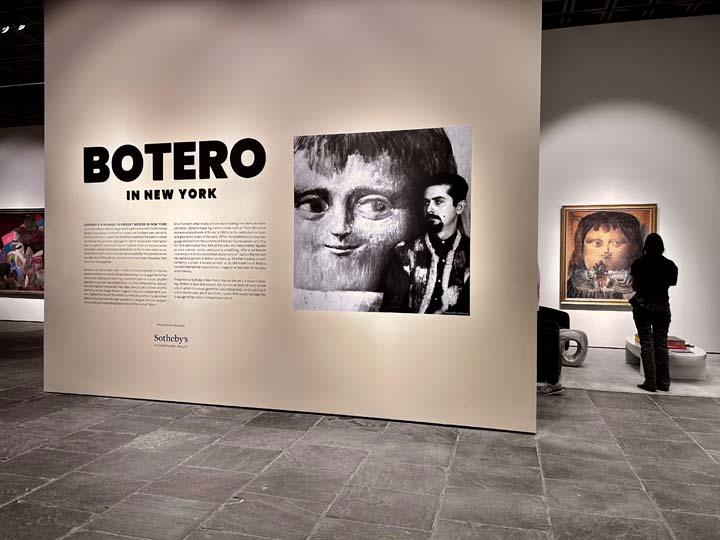
If you’ve been looking for an excuse to step inside the former Whitney Breuer Building since Sotheby's New York took it over, the time is now. Botero in New York—curated by Anna Di Stasi, Global Head of Latin American Art—gathers roughly 37 rare, early paintings and several small sculptures made by Fernando Botero (1832-2023) between 1960 and 1973, the years during which the Colombian master lived, struggled, and painted in the Big Apple. And it comes in the form of a monumental, deeply human counterpunch to what he called the "dictatorship of abstract art" that ruled Manhattan at the time. In a video on display, the artist says that he had to leave Colombia because, had he stayed, he would have only been the best painter in Colombia—whereas he intended to become the best painter in the world. Photo above by Peggy Roalf
.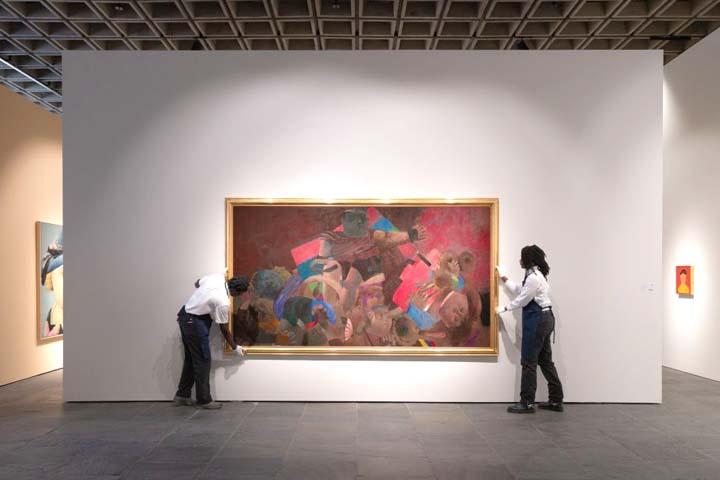
Organized in close partnership with The Botero Foundation, this private sale exhibition marks the first single-artist presentation hosted under Sotheby's stewardship of this historic venue. For those who associate Botero strictly with the smooth, highly polished, voluptuous bronzes such as those presented on Park Avenue by the Public Art Fund in 1983, this show offers a revelation. It tracks the artist’s journey from expressive, gestural brushwork seen in his portraits and suflower paintings to the flat, hard-edged, and geometrically precise proportion that ultimately birthed his signature style that was dubbed Boterismo. Above: Apotheosis of Ramon Hoyes, courtesy Botero Foundation
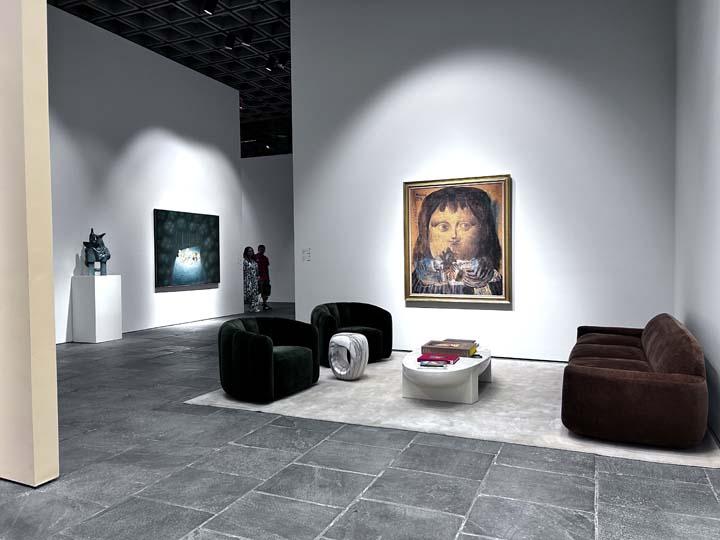
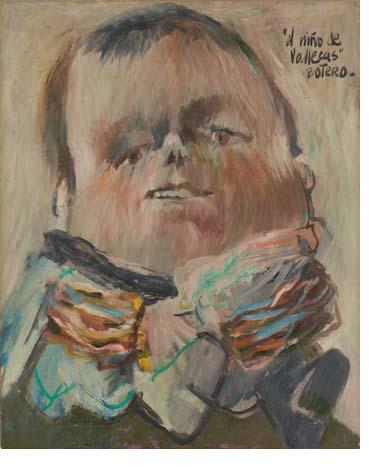 Arriving in New York in 1960 with a mere ten dollars to his name, Botero stubbornly resisted the gestural abstractions of Willem de Kooning and the existential anguish of Francis Bacon. Instead, he locked himself in his studio and spent hours at The Metropolitan Museum of Art, absorbing the Western canon while finding a parallel kinship with the burgeoning American Pop Art movement. Left: El niño de Vallecas, 1959, courtesy Botero Foundation; above, photo of reading nook by Peggy Roalf
The results on view are both witty and defiant. Look closely at Monalisa a los trece años (Mona Lisa, Aged Thirteen), a sly, volumetric reinterpretation of the da Vinci that challenges everything New York thought it knew about contemporary art at the time. Other notable highlights include Sunflowers, Familia Protestante, and two El niño de Vallecas.
Botero in New York is on view through September 7, 2026, at 945 Madison Avenue. The gallery is free and open to the public Monday through Saturday from 10:00 AM to 5:00 PM, and Sunday from 1:00 PM to 5:00 PM. Preview the entire catalogue. Watch Botero in New York.
Writing for Artnet, Simon de Pury says, Sometimes the Art World Gets It Wrong
Born in Medellín, Botero won a national prize when he was 20 that allowed him to travel to Madrid, Paris, and Florence, where he familiarized himself with the art of the greatest Old Masters. Over the next decade he gradually developed his own unique figurative style. His human figures all look very well fed, and even his objects appear to have been blown up like balloons. His work is instantly recognizable, which helped him become one of the best-known artists in the world during his lifetime.
In 1992, Jacques Chirac, the future French president who was then mayor of Paris, and who always had a keen eye for art, offered Botero the unprecedented opportunity to use the Champs-Élysées. The artist filled it with 31 of his large-scale bronze sculptures, becoming hugely popular with the public: Here was an artist who was easy to understand. The press loved him, too; Paris Match, then the most popular French photojournalistic weekly magazine, devoted many pages to the show, and all radio and television stations spoke about it. Click to continue.