


The DART Board: 09.23.2026
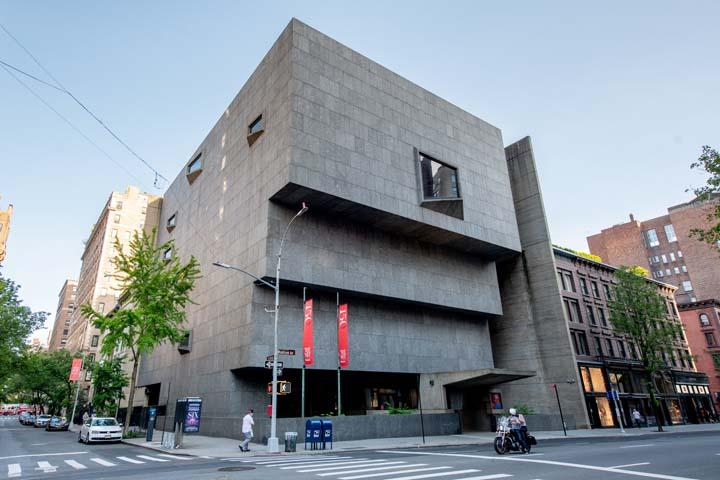
September 24–27: Independent 20th Century at The Breuer Building
As New York’s autumn art calendar kicks into high gear, the Independent 20th Century art fair takes over the iconic Breuer Building—the new global headquarters for Sotheby's in the former home of the Whitney. Under the sharp curatorial eye of Independent’s founder Elizabeth Dee, this year's fair nearly doubles its footprint to host 56 international exhibitors and over 130 artists, aggressively challenging the traditional, patriarchal narratives of 20th-century art.
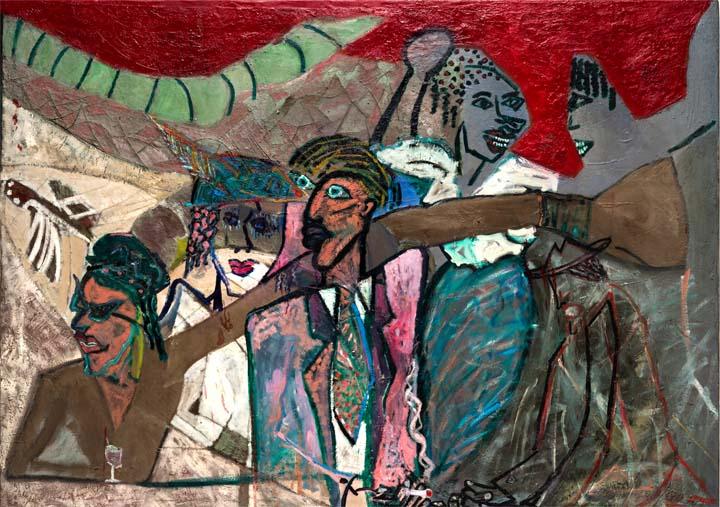
Visitors can navigate an extraordinary, multi-generational conversation ranging from Wassily Kandinsky and Paul Klee at Luxembourg + Co. to historical deep-dives like Berry Campbell’s spotlight on "The Women of Stable Gallery," which reclaims space for vital mid-century figures like Elaine de Kooning and Joan Mitchell. For the full rundown of dates, public hours, and must-see solo presentations energizing the Upper East Side this weekend, check out the official Independent Art Fair Guide. Above: Reginald Madison, Zenobia, 1992
The magazine Apollo, which itself has been around for a century, covering: “everything,” it says, “from Byzantium to Basquiat”, includes a special section dedicated to Independent, with a profile on Elizabeth Dee as a pioneering figure who rejected the constraints of the commercialized art world in favor of a curation-first approach. Furthermore, her perspective highlights New York City's lasting vitality as an indispensable cultural capital driven by its deep artistic infrastructure. Click to read the full article at Apollo.
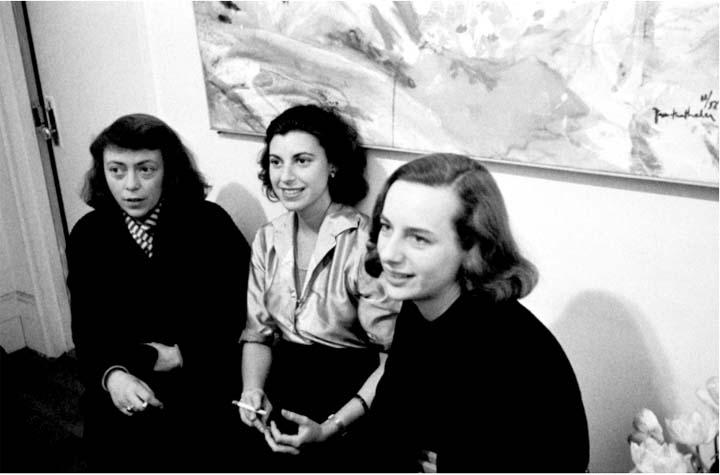
Save the date, September 27th at 4:00pm, Panel Discussion, Market Insight: The Women of Abstract Expressionism, in the 5th Floor Lounge of the Breuer Building. It will explore the market reassessment and dealer efforts breathing new life into the legacies of these outstanding women artists. Above: Joan Mitchell, Helen Frankenthaler, and Grace Hartigan in 1957.Photograph by Burt Glinn / Magnum
Save the date, Saturday, September 26,1pm: The Expatriates: Joan Mitchell and Kimber Smith Film screening of the original documentary Joan’s Friends and discussion on Joan Mitchell with John Yau and Guy Bloch-Champfort, moderated by Alya Sama of Sotheby’s. Also celebrating the English edition of Joan Mitchell: By Her Friends by Guy Bloch-Champfort, published by les presses du réel.
This event coincides with Bueno & Co's presentation The Expatriates: Joan Mitchell (1925–1992), Kimber Smith (1922–1981), curated by John Cheim, for the 2026 edition of Independent 20th Century. Info Included with tickets to Independent
Independent 20th Century at The Breuer, 945 Madison Avenue, 5th Floor, New York. Tickets
The excitement swirling around Independent 20th Century occupying the Breuer Building this fall is echoed by an outstanding group of museum exhibitions presenting some of the signal moments in the emergence of New York City as a global art center. Just a few blocks away:
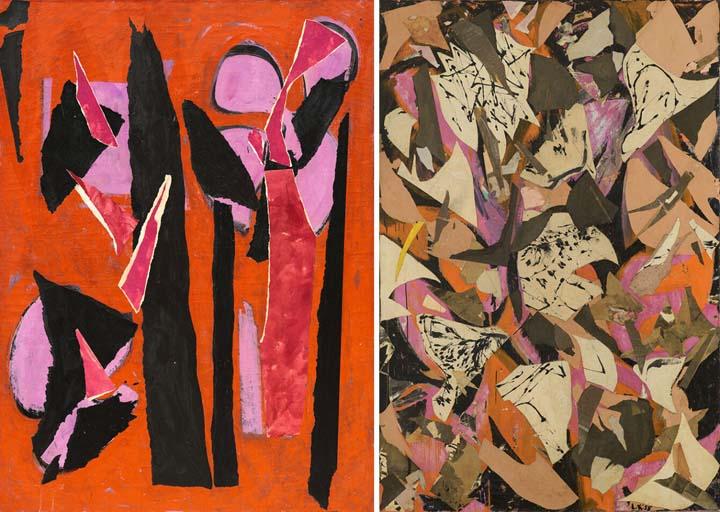
Krasner and Pollock: Past Continuous at The Met
Lee Krasner (1908–1984) and Jackson Pollock (1912–1956) met as emerging artists in New York in the winter of 1941. They married in 1945 and moved to Springs, Long Island, where they remained entwined personally, artistically, and professionally until Pollock’s untimely death. While Pollock’s reputation historically eclipsed Krasner’s, today, both artists’ practices are rightly recognized as central to the innovations of art from the mid-20th century onwards.
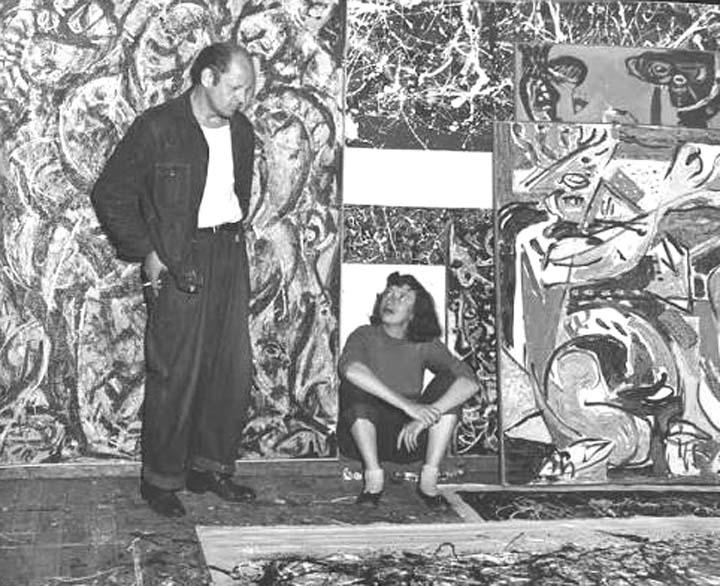
Drawing its subtitle, Past Continuous, from a 1976 painting by Krasner, the exhibition traces parallel lives and practices—forged first by lived experience, then shadowed by memory. Their early paths traced distinct strands of American modernism that would ultimately converge in the rupture known as Abstract Expressionism, a movement that valued the translation of inner feelings into dramatic visual action. In the wake of World War II, artists asked why art mattered and what it could be. For Pollock, his breakthrough was the “drip” technique, a radical mode of painting that flourished in a condensed but prolific period. Krasner’s varied practice was typified by ceaseless explorations of abstraction, often cued by her abiding interest in the possibilities of nature and color.
Through January 31st at The Metropolitan Museum of Art, 1000 Fifth Avenue, New York, NY Info
October 11: Roy Lichtenstein | Like New at The Whitney
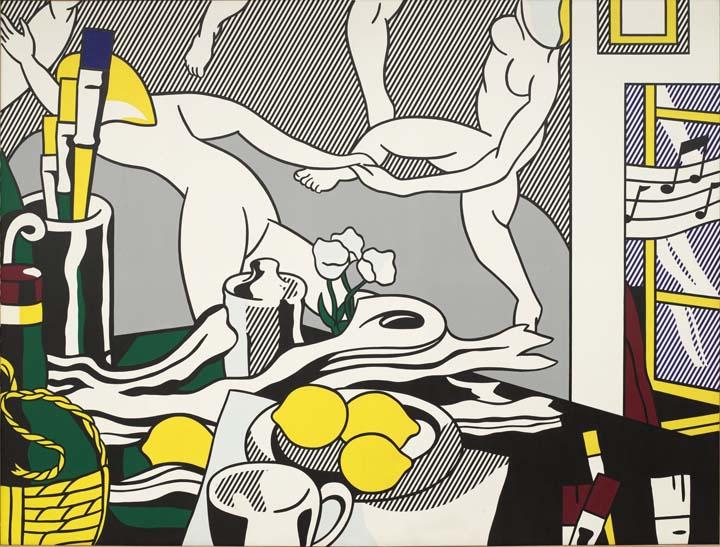
Roy Lichtenstein: Like New offers a bold reconsideration of Lichtenstein for the present. Bringing together roughly 130 works made from the early 1940s through the 1990s, the exhibition traces how his early interest in perception and visual recognition shaped a career-long investigation into duplication, simulation, and image culture. Across painting, drawing, collage, prints, sculpture, and film, Lichtenstein treated images as unstable forms that could be borrowed, translated, reframed, and transformed.
The exhibition features many of Lichtenstein’s most celebrated works, including Look Mickey (1961), Girl with Ball (1961), Masterpiece (1962), Drowning Girl (1963), Happy Tears (1964), Little Big Painting (1965), Rouen Cathedral, Set III (1968-69), and Artist’s Studio “The Dance” (1974). It also includes a recreation of three murals, including a nearly 96-foot long iteration of Greene Street Mural (1983).
The show also reunites, for the first time, all the works from Lichtenstein’s first exhibition of Pop-style work at Leo Castelli Gallery in 1962. This pivotal moment for the artist would come to define an era with its impact extending far beyond Pop, shaping generations of artists, including Louise Lawler, Richard Pettibone, and Sturtevant, whose work will also be on view in this exhibition and further illuminate Lichtenstein’s relationship to copying, influence, appropriation, and the afterlife of images.
Through May 10, 2027 at Whitney Museum of American Art, 99 Gansevoort Street, New York, NY Info
October 29: Elaine de Kooning at Berry Campbell
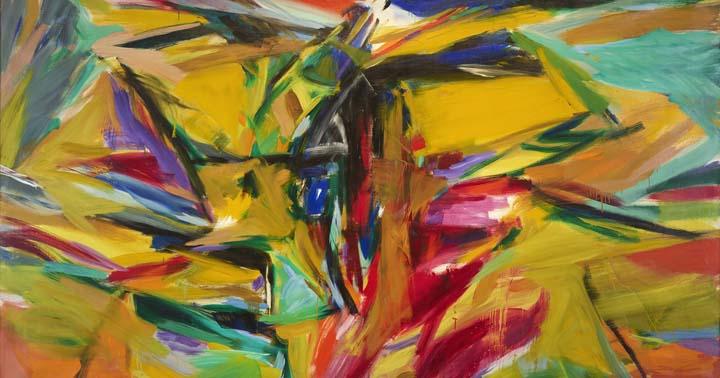
In 1962, Abstract Expressionist painter Elaine de Kooning (1918-19890began preparatory sketches for a monumental commission: a portrait of President John F. Kennedy. In the year leading up to his assassination, she observed the president in his natural habitat and drafted psychological, impressionistic studies in her signature gestural style. Now, you can examine the historic series alongside other works in de Kooning’s groundbreaking oeuvre, some of which are on view for the first time since her death.
De Kooning was a founding member of the 8th Street Club and one of 11 women included in the landmark 1951 Ninth Street Show, part of a generation of women later dubbed the “Ninth Street Women” whose contributions to Abstract Expressionism have undergone renewed scholarly attention in recent years. De Kooning also worked as an art critic for ARTnews, helping introduce the movement to wider audiences.
Through December 19th at Berry Campbell, 524 West 26th Street, New York, NY Info
Oct. 25th: Brancusi: The Artist and His Studio at MoMA
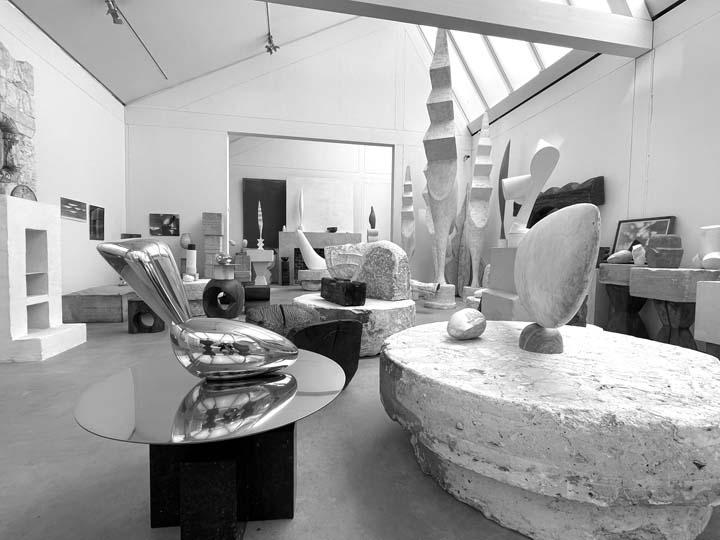
Brancusi’s studio, on impasse Ronsin in Paris, was where he lived, worked, entertained friends and clients, and displayed his sculptures. There, he created some of his most groundbreaking works, which blurred traditional boundaries between pedestal and object, movement and stillness, originality and variation. Among them was Bird in Space, notoriously declared by a US customs agent to be inadmissible as a work of art.
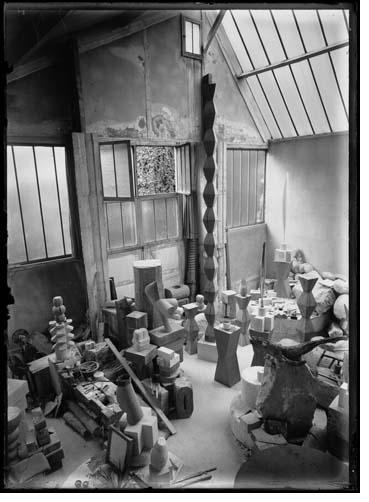
Over four decades, Brancusi’s Paris studio evolved from an active space of experimentation to an all-encompassing environment—a work of art in itself. Wanting to preserve the unity of the studio, Brancusi bequeathed its entire contents to France in 1957, transforming a home, workshop, and exhibition site into an enduring monument.
Known today as the Atelier Brancusi, it is a cherished part of Centre Pompidou’s collection in Paris—and, like that museum, it is currently closed for renovations. For the first time in decades, rarely lent sculptures will travel to New York, along with a rich selection of Brancusi’s photographs, films, hand-carved furniture and pedestals, tools, and archival materials.
For Brancusi, the studio was never just a workspace. It was a living and breathing work of art in its own right. He meticulously arranged his sculptures, treating the pedestals as extensions of the artworks and orchestrating how natural light would hit the polished bronze and carved wood throughout the day. The MoMA exhibition aims to capture this unique spatial philosophy, allowing visitors to experience the relationships between the objects exactly as the artist intended.
This large-scale exhibition brings those works into dialogue with MoMA’s celebrated Brancusi collection and several important local loans. Together, they shed new light on Brancusi’s sculptures while revealing his studio as a place of work, play, and invention, offering an intimate, complex portrait of an artist who redefined sculpture in the 20th century through the radical simplicity of his forms.
Through February 27th At MoMA, 11 West 53rd Street, New York, NY Info