


The DART Board: 06.17.2026
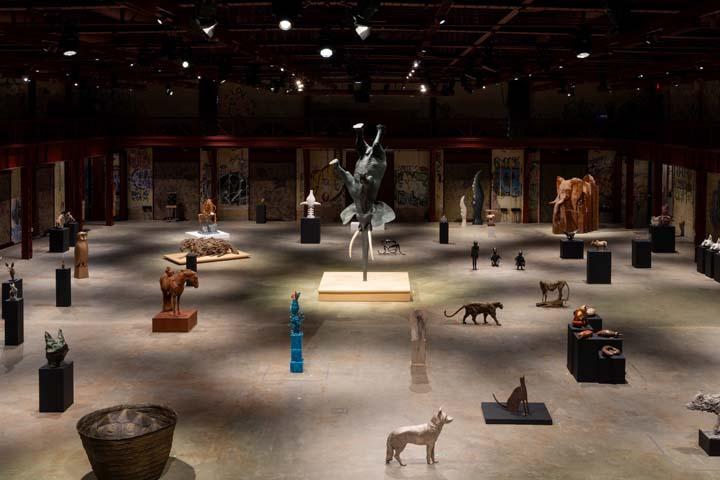
The Ark at Powerhouse Arts
The cavernous, industrial expanse of Powerhouse Arts in Gowanus—a beautifully repurposed former power station—has been transformed into a sprawling, modern-day art sanctuary. Curated by Eric Fischl and Eric Shiner, the venue's main inaugural exhibition gathers over 90 animal sculptures and installations by 51 artists. It is an ambitious, visually stunning exploration of coexistence, vulnerability, and our shared precarity in an era of climate crisis.
Originally conceived and shown at The Church in the historic whaling town of Sag Harbor, the exhibition takes on an entirely different, harder-edged resonance within the raw, concrete-and-brick architecture of Brooklyn. Where the original venue whispered of maritime history, Powerhouse Arts amplifies the dialogue into a resonant shout out about industrial damage, responsibility, and the possibility of repair.
The exhibition moves effortlessly across generations and geographies, uniting traditional forms with contemporary, found-object practices, with a range of materials and artistic voices offering a testament to the curators' expansive vision.
Renowned figures like Wangechi Mutu, Nari Ward, and Cannupa Hanska Luger present works that challenge our relationship with the natural world, alongside whimsical contributions from Rob Pruitt and timeless forms by François-Xavier Lalanne. But the triumph of the show is its staging. Visitors are encouraged to move "in the round," engaging in intimate, up-close encounters with the animals—from monumentally scaled beasts that command the cavernous halls to local urban pigeons perched quietly in the corners.
Save the date, July 11, 1:00 pm: Crafternoon | Sculptural Critters in Clay and Cardboard. Info
Through August 30 at Powerhouse Arts, 153 2nd St, Gowanus, Brooklyn, NY Info
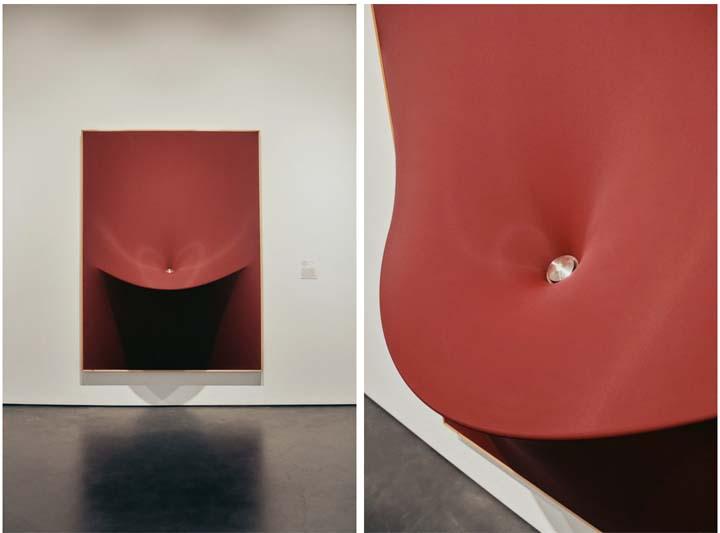
Fade at The Studio Museum in Harlem
The term "fade" acts as a capacious concept, evoking cinematic transitions, the precision of a barber's fade, or a basketball fadeaway, using abstraction and material transformation as a vehicle for cultural resistance. While past iterations focused on broader, outward definitions of "post-Black" art, Fade shifts toward a quieter, more personal register. The sixth installment of the museum's influential "F" shows introduces 17 emerging artists of African and Afro-Latinx who demonstrate their engagement with close looking, tactile experimentation, and the subversion of everyday materials. What immediately strikes you when walking through the spacious, light-filled galleries of the museum’s new home is the absolute freedom from formula. There is very little interest in the kind of polished, market-driven spectacle that dominates so many contemporary spaces. Instead, the work feels deeply private, formally eccentric, and deeply invested in the physical act of making. Above: Sink Belly by Kiah Celeste
For example, Kiah Celeste’s Sink Belly encapsulates revelatory exercise in tension. By taking a simple piece of stretched spandex and interrupting its surface with a heavy metal sink drain, Celeste creates a highly evocative, minimalist fertility totem out of the mundane. With Y. Malik Jalal’s Pendant, a church-like light fixture hangs in the space, casting images of Black domestic spaces through cathedral-window glass panes. It forces a dialogue between institutional sacredness and personal memory.
The exhibition excels at shifting scales, moving seamlessly from the heavy and tangible to the completely ephemeral. A towering, rack-shaped framework, A Praise of Shadows, by Jésus Hilario-Reyes is tightly wrapped in heavy black power cords. The piece emits a slow-building, layered audio track combining rave sirens, osprey warnings, and hurricane winds—translating structural weight into pure atmosphere.
Fade proves that an art exhibition doesn't need to shout to shake the room. By slowing down the metabolism of the classic group survey, the Studio Museum in Harlem has given us a space to look closely, breathe, and witness a new generation of artists redefine the edge of contemporary abstraction.
Through September 6 at The Studio Museum In Harlem, 144 West 125th Street, New York, NY Info
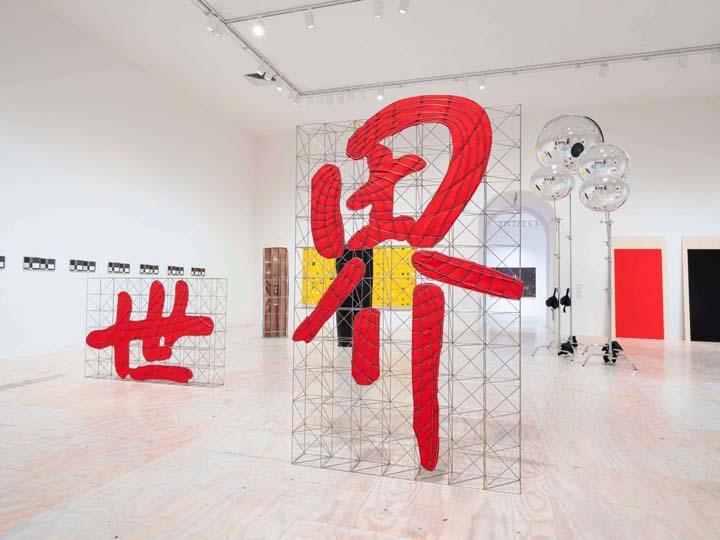
Greater New York 2026 at MoMA PS1
MoMA PS1 continues to undermine the museum-as-authority model with its sixth iteration of Greater New York. Marking fifty years of experimental grit in Long Island City, this year's survey does something increasingly rare in our hyper-commercialized cultural landscape: it lets the artists speak entirely in their own dialects, unfiltered by the typical dictates of the blue-chip market.
Curated wholly in-house for the first time, the show operates less like a polished institutional index and more like a living embodiment of the borough in which many of its artists reside. It is a striking, narrative-rich assembly of 53 early-career artists and collectives who are looking directly at the psychological weight, economic precarity, and brilliant resilience of a truly diasporic New York. Instead of high-gloss, oversized spectacles designed for art-fair mielieus, the galleries are filled with tactile, hand-wrought material choices—from handcrafted signs to intimate video installations that demand your full presence and attention. It’s retinal, deeply human, and often visceral
Through August 17 at MoMA PS1, 22-25 Jackson Avenue, Queens, NY Info
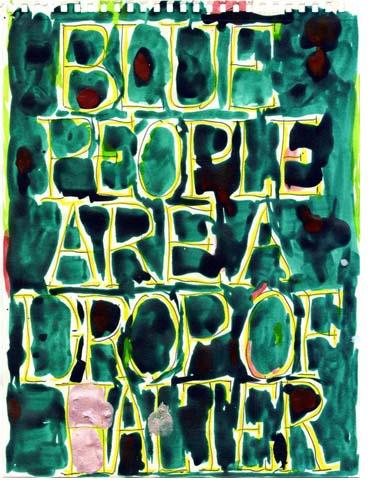 Pope.L | Certainly an Act at the Drawing Center
If drawing is a way of thinking out loud, the legendary Pope.L didn’t just think on paper—he wrestled with it. Known for his muscular street crawls, this survey at The Drawing Center reveals the quiet, volatile core of his practice through over 200 works on paper that trace a raw, forty-year trajectory. The exhibition showcases paper as a battleground for ideas on race and culture, offering a masterclass in graphic subversion through an artist who used the page to fiercely talk back to the world.
By using fictional, impossible categories alongside real ones—such as asserting that "Blue People Cannot Conceive of Themselves"—he systematically dismantled the rigid, systemic logic used to uphold white supremacy and racial hierarchy. The physical frailty of the paper acts as a metaphor for the unstable, manufactured nature of these social constructs. With Relational Painting a.k.a If Black Is Beautiful... a rarely exhibited installation piece, the artist bridges the gap between static drawing, structural architecture, and social provocation, The work expands the boundary of a "drawing" by deploying text and graphic marks directly into a spatial arrangement, demanding physical movement from the viewer.
Through September 27 at The Drawing Center, 35 Wooster Street, New York, NY Info
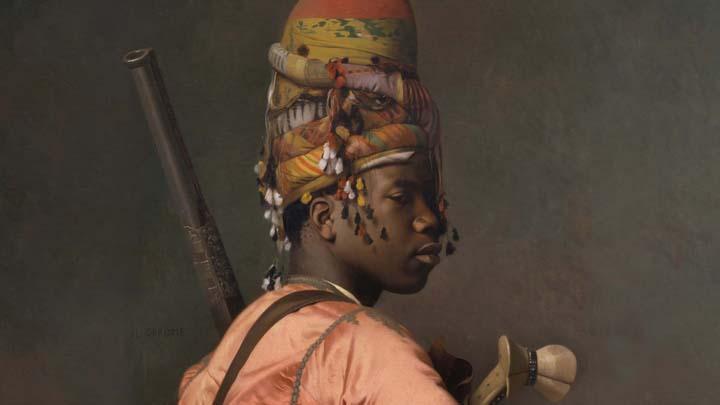
Orientalism | Between Fact and Fantasy at The Metropolitan Museum of Art
This masterful, long-overdue reckoning with the highly staged allure of the 19th-century Western gaze marks the first time the museum has turned its entire lens toward the subject of Orientalism in Wetern art. Curated by Deniz Beyazit, Maryam Ekhtiar, and Asher Ethan Miller, the exhibition spreads across four beautifully integrated galleries bridging the European Paintings and Islamic Art departments. It challenges viewers to dissect exactly where raw observation ends and colonial theater begins. What makes this show disarmingly astute is its refusal to let Orientalism exist solely on flat, gilded canvases. By grouping nearly 180 decorative objects—arms, armor, textiles, and ceramics—alongside canonical European paintings, the curators brilliantly unlock what might be described as a 19th-century “reality effect.”
The show aims a spotlight on Ottoman polymath Osman Hamdi Bey. By placing his revolutionary canvases directly in dialogue with Western contemporaries like Gérôme and Eugène Delacroix, the curation offers an internal reclamation of Islamic motifs. Hamdi Bey utilizes the same visual vocabulary as his European peers. However, his insider view completely strips away the exoticized, and submissive romanticism favored by the French salons. Instead, the exhibition tracks a systematic exchange of "hard" and "soft" power, showing how globalism, colonialism, and massive international expositions triggered a structural design revolution in European decorative arts.
While you’re there, take a close look at Jean-Léon Gérôme’s striking portrait [above] Bashi-Bazouk (1868–69). The figure’s luxurious silk tunic seems far more suited to a portrait frame than an actual battlefield. As the exhibition reveals, this was a theatrical illusion pieced together in a Parisian studio—a trope in Western art that has persisted well beyond its colonial roots.
Through February 28 at The Metropolitan Museum of Art, 1000 Fifth Avenue, New York, NY Info