


Josh Cochran's Library
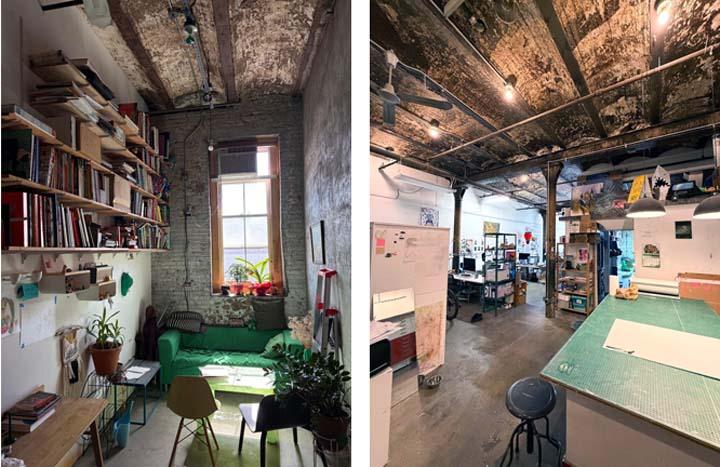
You don’t want to miss this email conversation I recently had with Josh Cochran—artist, art director, muralist, educator and AI45 juror. In sharing his thoughts on collecting books and using his library, he also tells a story of childhood dreams come true. And please stay tuned for information about a new project launching soon
Peggy Roalf: As an artist, writer and educator, you must own a lot of books. How have you structured your library for how you use it?
Josh Cochran: It’s a pretty chaotic stacking of books that I own. No real rhyme or reason to the structure.
PR: When did it become evident that you were meant to be an artist?
JC: Pretty early on. When I was 8, my mom took me to an art class with other kids and we made all sorts of marker drawings and collages. I still have these sketchbooks and even to me (maybe I’m biased) it’s pretty obvious I was meant to be an artist. Growing up, I never really had any aspirations to be anything but something art related.
Q: Do you remember the first art book you ever purchased? What drew you to that particular volume, what did it mean to you at the time, is it still part of your library?
JC: Frank Thomas and Ollie Johnston, The Illusion of Life. I grew up watching a lot of Disney movies and always had dreams of one day being a background painter or character designer. Later in college, I studied animation and was told that this is basically the animation bible. More than all the techniques discussed in the book, I would linger more on the photos of the people working at their desks with mirrors for facial expression reference or painting on cells. It was really important to me to actually see humans doing this dream job I always wanted. I still have this book.
Q: At what stage had you collected enough books to be concerned about having bookcases that were right for your own library?
JC: I honestly never really consider the actual bookcase. I would just stack the books wherever they needed to be. Sometimes I would consider the bookshelf or bookcase but only when I first move into a space.
Q: Where is your library located?
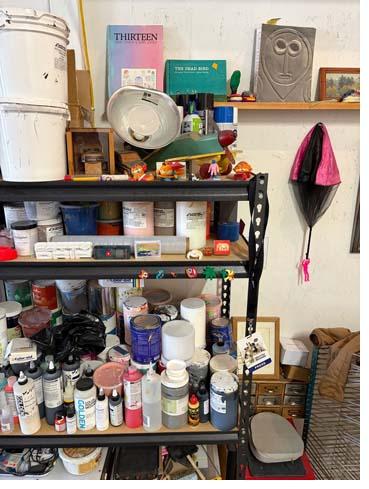
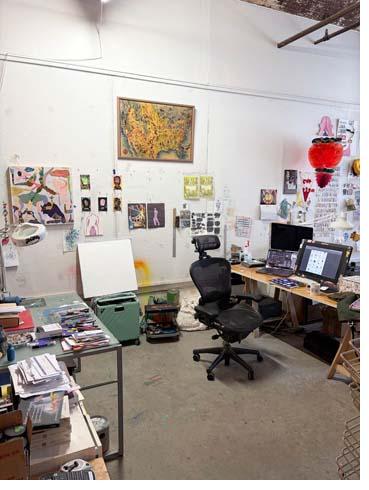
JC: In my Crown heights studio, which I share with 4 other people and at home about 10 minutes walking distance apart.
Q: What went into your choice of bookcases — any research, any seen/admired among friends and colleagues? What was your biggest takeaway from this work?
JC: No research, just vibes. I use to share a tiny studio with my friend Jim Datz who created the first iteration of my current shelving system. Basically, I get metal wall standards from Lowes, shelf brackets and long pieces of plywood that I cut down to size. It’s really affordable, easy to breakdown and I love the simple design.
Q: How you organize your art, design and photo books?
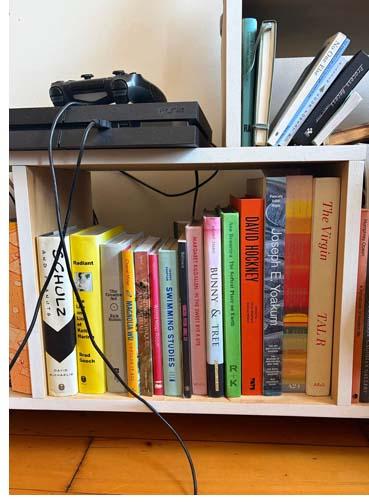
JC: I keep the nicer books at home and stragglers at the studio. But it’s a very fluid system. I’m constantly hauling books back and forth between the two places.
Q: How do you maintain your library? For example, do you periodically take it apart and reorganize, or something along those lines?
JC: Sometimes my books start to spill out and I’m forced to reorganize.
Or sometimes a guest will say something disparaging about my shelves which will also spur me to reorganize.
Q: What do you do when you run out of shelf space
JC: Get rid of books asap and clean out my studio. Living in Brooklyn I have to try to keep my physical belongings at a reasonable amount.
Q: Have you ever had to move your library? What are the best and worst things about that situation?
JC: Yes, many times! Best thing is you get to start over with the best intentions. Worst thing is that it’s moving. And moving is hell.
Q: Is there anything you might want to include about favorite libraries for doing research or just hanging out in?
JC: I think it’s nice to always have a rug area in your library or at least have a couch big enough to take a nap on. Also a low table for drawing, drinking coffee and reading. Good cozy lighting is also really important. My favorite library moment is sitting in an aisle of a big library and getting lost in a random book I pulled purely based on its spine.
Q; Do you consider being a bibliophile a special form of madness?
JC: It’s probably one of the best ways to live life. Incredible to have access to information or images that largely exist outside of the internet. Website
If you would like to subscribe to DART: Design Arts Daily, please go here