


The DART Board: 02.25.2026
Thursday, February 26, 5-7pm: Film Screening | Remembering Yayai at Grey
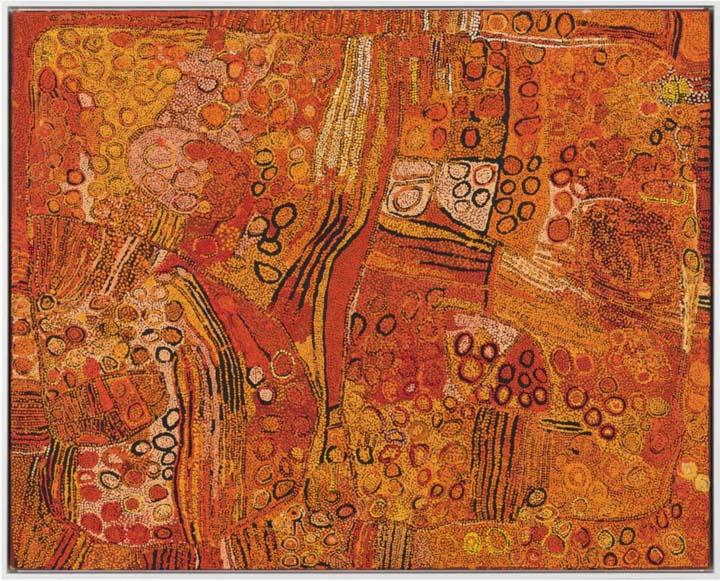
Fifty years ago, a painting movement emerged at Papunya in Australia’s Central Desert. It arose with such force and conviction that one could be forgiven for thinking it had existed forever, as though etched from the earth by the slow passage of time. In fact, formed in the aftermath of colonization, the enduring art movement is as much a product of recent historical circumstances as the ancient traditions on which it draws. Above: Naata Nungurrayi, "Karilywarra," 2010.
Now widely recognized in global contemporary art, painting at Papunya began in 1971 when a small group of Aboriginal men in the community started to represent once-secret ancestral designs of ceremony and ritual, using acrylic paint on scraps of cardboard, linoleum, and Masonite. Their seemingly abstract paintings revealed living ancestral connections known as Tjukurrpa (Dreaming), which fueled powerful artistic experiments with color, line, and space. The following year, in an act of unprecedented corporate sovereignty, the artists formed Papunya Tula Artists Pty Ltd., the first Aboriginal-owned arts enterprise in Australia. The company’s economic success has allowed generations of men and women artists to stay on their ancestral lands, and continues to provide vital opportunities for local community development.
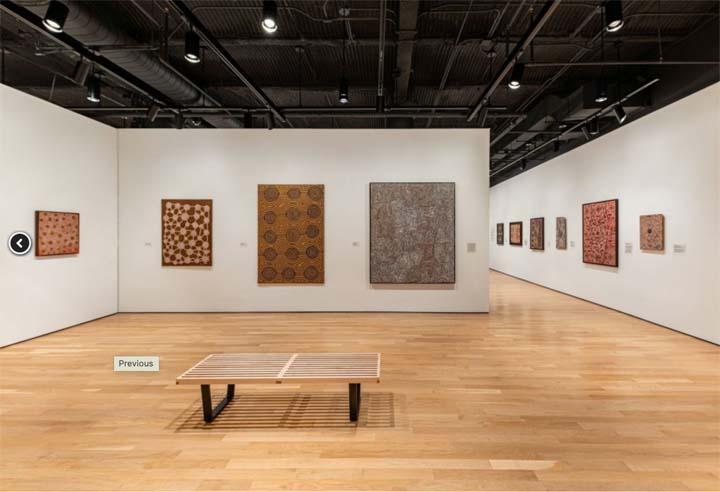
Irriitja Kuwarri Tjungu, the first US exhibition to survey Australia's most globally recognized Aboriginal art movement, is now on view at Grey Art Museum. Celebrating fifty years of Papunya Tula Artists, itt features nearly 120 paintings, including some of the most iconic works of Indigenous Australian art. Rather than being arranged chronologically, the paintings are displayed according to Indigenous principles of genealogy, place, and ancestral travels. In doing so, the show reveals the deep, ongoing relationship between Aboriginal artists, the places they paint, and Tjukurrpa, which exists in a constant state of past and present together—or, in Pintupi, irrititja kuwarri tjungu.
Join filmmaker and anthropologist Dr. Fred Myers (NYU Anthropology, Emeritus) and Dr. Jane Anderson (NYU Anthropology and Museum Studies) for a screening of REMEMBERING YAYAYI (60 min, 2014)n followed by a discussion. Register. Programs
Kriser Theater, 25 Waverly Place, FL1, New York, NY
Irriitja Kuwarri Tjungu continues at Grey Museum of Art, 18 Cooper Square, New York, NY Info
Just in from Aperture:
William Eggleston | Last Dyes at David Zwirner
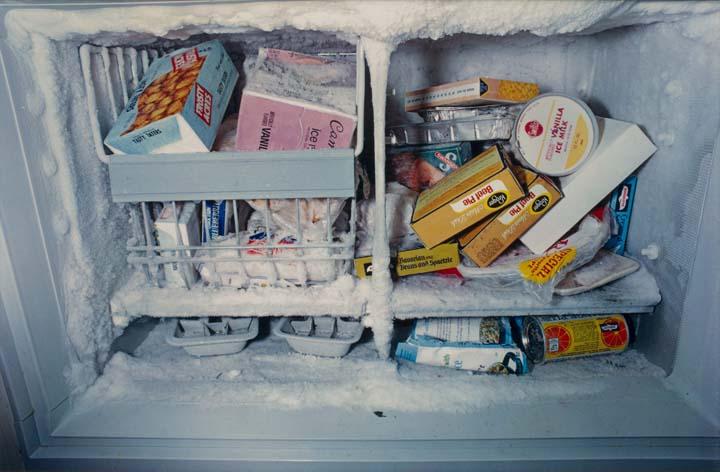
Remember that the familiar was once a stranger. In the late 1960s and early ’70s, when William Eggleston began photographing in color, he traveled to what he described as the “foreign landscapes” of the American South: the shopping centers and gas stations and treeless housing developments that had begun to crop up around Memphis, where he still lives (he is eighty-six), and along the roads in and around Mississippi, where he was born and raised. He lowered himself to the asphalt, seeming to identify with the lonesome cars parked outside solitary, identical houses. But when he stared into the kitchen freezer, he found an almost mystic portal, framed in frost, whose haphazardly stored ice trays, TV dinners, and Tasty Taters made a painterly palette, a perfect harmony of form and color. Above: William Eggleston, Untitled, 1973
By the time the MoMA show opened in 1976, many of the once-foreign sights in Eggleston’s pictures had invaded the psychic geography of the Delta as insidiously and quick as kudzu creep, becoming assimilated, normalized. Perhaps this is why Hilton Kramer of The New York Times, among those initially reluctant critics, pronounced Eggleston’s pictures “perfectly banal.” Perhaps Kramer’s vision was obscured by the times, for in these pictures the apparently benign is revealed as ignominous and slippery and strange, resulting in images lodged somewhere between the mundane and the utterly surreal. More at Aperture
Through March 7 at David Zwirner, 533 West 19th Street New York, N
Just in from Sue Barr
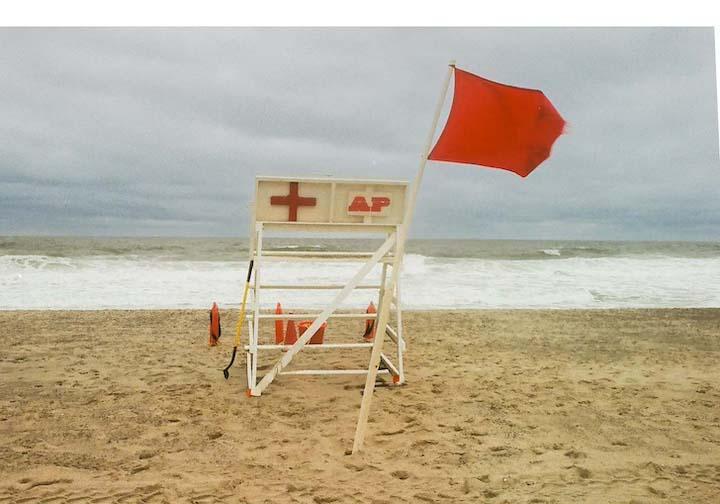
Here for the Light
Closet Studio, Ocean View, and the Fine Art of Moving Forward
I did not move to Asbury Park for reinvention.
I moved here because the ocean is honest, the light is generous, and I have reached the point in life where pretending to stay the same feels like a slow kind of disappearance.
The boardwalk is steps from my door. The Atlantic is never subtle. Some mornings it looks soft and forgiving. on other days, it is steel grey and unimpressed.
It does not care where you were last year.
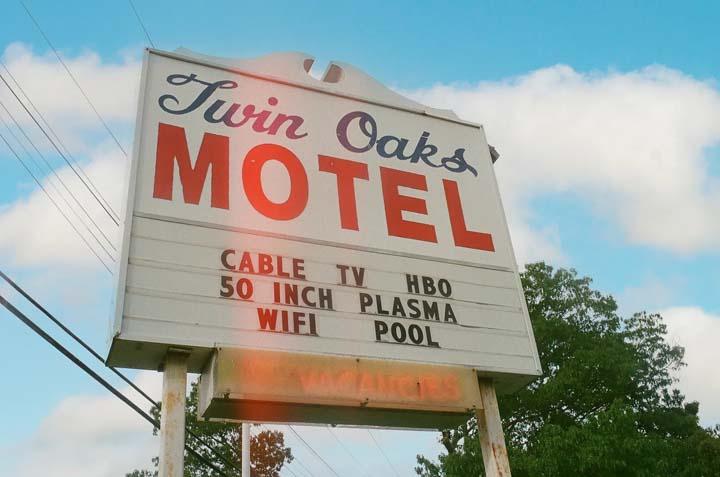
I joined the Jersey Shore Arts Centre, the old high school on the edge of town.
I rented a literal closet. Not a metaphor. A closet.
But I also have access to the flex rooms, where light pours in through tall windows and lands on the floor like it has somewhere to be. Big open space. Good energy. The kind of light that makes you want to make something.
Turns out you can shrink your footprint and expand your possibilities at the same time.
Last week, I photographed a DoorDash food job in one of those flex rooms.
Pizza. Pasta. Antipasto with only the natural winter light streaming in.
Not glamorous. Not headline worthy. Just real work. Real money. Real proof that I am building something again.
This week, I pitched starting an art collective in that same space.
Glitter, Glue and Gossip.
Because sometimes the most serious thing you can do is invite people to a table with scissors, stacks of old magazines, sparkly paint and permission. Read more here
Sue Barr is an award-winning visual storyteller whose imagery is both aspirational and authentic. Throughout her career, her commercial photo assignments have included a diverse range of industries with presences all over the world. Info
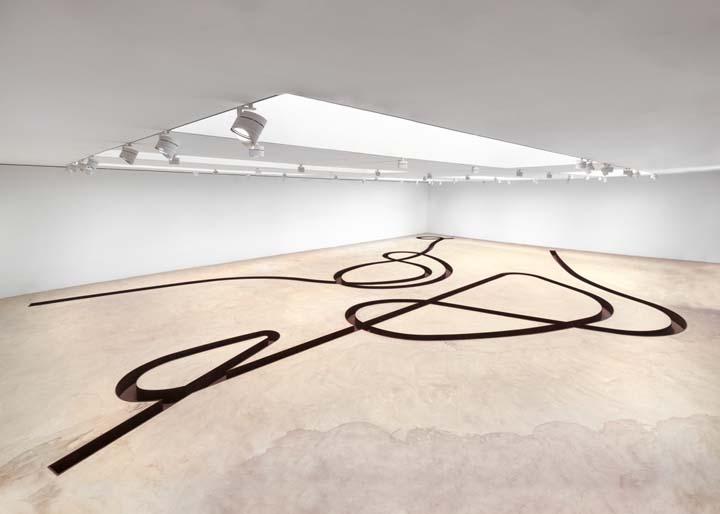
Michael Heizer | Convoluted Lines at Gagosian
Gagosian presents two new negative sculptures by Michael Heizer, Convoluted Line A and Convoluted Line B (both 2024) together with a small selection of related early drawings. The sculptures represent the pinnacle of an artistic lineage that reaches back to Heizer’s earliest outdoor sculptures made in the 1960s in the Nevada and California deserts. More here
While works in the installation photo above seem flat, they are, in fact, welded steel forms roughly two feet deep (below). Watch the video here.
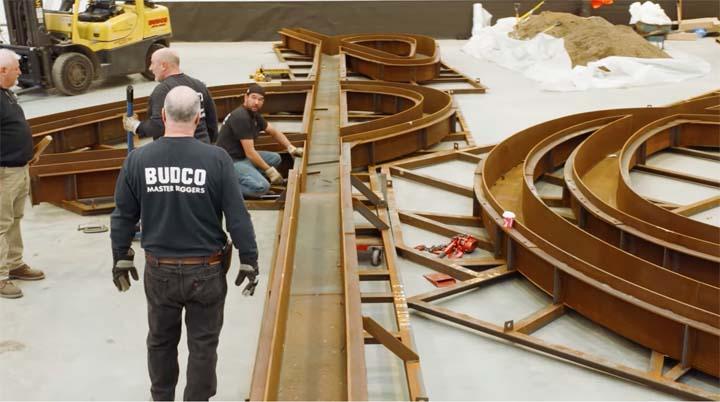
Heizer’s ongoing inquiry into the formal possibilities of line, size, and negative space began in the 1960s with shaped canvases composed with lighter and darker geometric passages to suggest the absence and presence of form. In 1967, he began employing these concepts in three-dimensional sculptures, cutting into the earth. Early negative line sculptures include the Nine Nevada Depressions (1968, no longer extant), multiple excavations in the form of loops, intersections, zigzags, and broken lines across 520 miles of terrain, escalating in Double Negative (1969), two 50-foot-deep cuts into two opposing mesa walls near the Virgin River in Nevada. Find out more about Heizer's massive Nevada works in the outstanding documentary, Troublemakers: The Story of Land Art (dir. James Crump).
Through March 28 at Gagosian, 522 West 21st Street, New York, NY Info