


Uncarved Masterpieces at the Met
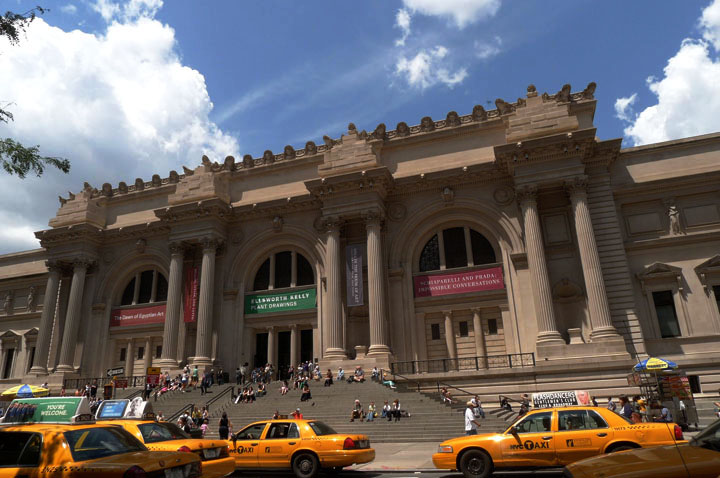
How many times have you walked down Fifth Avenue past the Metropolitan Museum of Art and wondered about the mammoth, uncarved blocks of limestone topping the columns at the main entrance? Recently, an eagle-eyed friend pointed them out, so I took this photo with the idea of tracking down the story.
It wasn’t much of a hunt, thanks to Christopher Gray’s Streetscape column, a regular feature in the Sunday New York Times Real Estate section. In conjunction with an exhibition about the architecture of the museum in 2001, Gray took the unsculpted blocks as the subject of his July 8th column. Here’s an extract:
The architect [Richard Morris Hunt] came up with a master plan…that included a new fourth wing that fronted directly on Fifth Avenue.…An 1894 drawing shows a facade of three triumphal arches joined by huge paired columns, something in the spirit of Grand Central Terminal 15 years later but much fancier.
Hunt died in July 1895, but not before he produced nearly final designs for the facade, reducing the width of the arches and more closely detailing the actual decorative program—31 separate works of sculpture. Those that were executed include standing caryatid figures on the wings, heads of Athena as keystones for the three arches and six medallion busts of old masters flanking the arches.
But much of Hunt's sculptural program was not carried out, including long inscriptions in the upper frieze and in panels on the wings, reproductions of famous sculpture in the niches behind the columns and, at the top of the building, four large figural groups. And limestone was substituted for marble. Hunt died before he could make more than generic designs for the figures, but [Morrison H.] Heckscher [chairman of the museum’s American Wing] said that the architect had recommended that the figural groups represent the Egyptian, Greek, Renaissance and modern periods.
Preliminary drawings suggest that in scale and arrangement they would have looked something like the Four Continents series on the Bowling Green front of the old United States Custom House. [Read the entire article].
06252012