


Dead Stuff in Art
It's not surprising that taxidermy in art has become almost mainstream. Perhaps the first instance, in contemporary art, is Damien Hirst's shark in formaldehyde, The Physical Impossibility of Death in the Mind of Someone Living. Created in 1991, its replacement (executed in 2006 when the original was found to be disintegrating) was acquired by the Metropolitan Museum of Art in 2007. More recently, Maurizio Cattelan's disturbing installations that include taxidermized horses have been seen at the Guggenheim and the New Museum. Even stranger are the hybrid animal figures, or Misfits, of Thomas Grünfeld, which continue an age-old German folk tale tradition while simultaneously recalling Meret Oppenheim's Surrealist fur-lined teacup.
The relationship between taxidermy and photography has run along parallel paths since post-Darwinian voyages of discovery. Karen
Knorr, the photographer most recently connected with the practice, was inspired by the tales of Aesop, La Fontaine and Ovid. Her photographs of examples from famous European taxidermy collections,
shot in ornate French chateaux, were exhibited and published as Fables-Photographies.
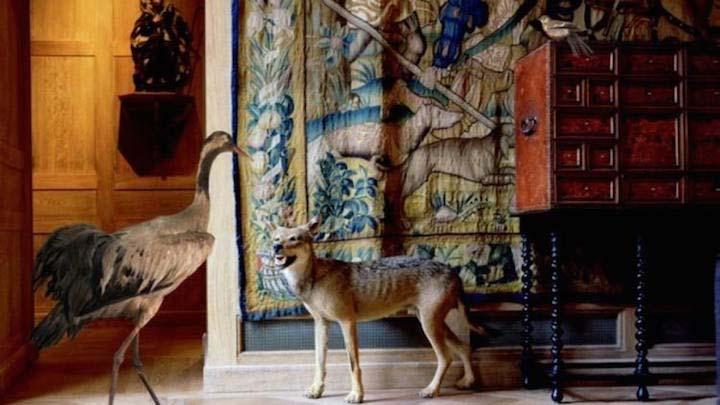
(c) Karen Knorr, La Musee de la Chasse et de la Nature
Along these lines, La Musee de la Chasse et de la Nature [the Museum of Hunting and Nature] in Paris celebrates the long and noble tradition of hunting in all its pomp and elegance, always with an eye to the value of animals in their relationship to human works.
Across the pond, hunting holds a completely different place in the social fabric. Here, hunting was not restricted to one social or economic class, therefore the practice has evolved along distinctly egalitarian lines. The right to put food on the table was so precious to the first immigrants that the right to bear arms became embedded in the rule of law in ways never envisioned by the founding fathers.
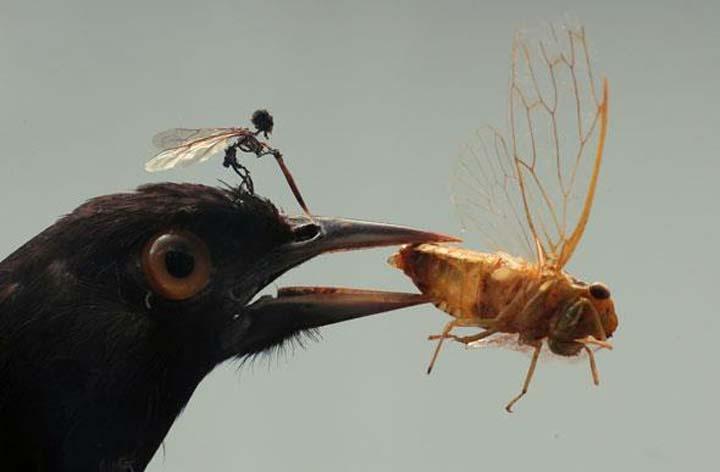
(c)
Polly Morgan
Today, as many natural history museums have turned away from dioramas with taxidermy as a didactic tool, a number of artists concerned about climate change and extinction have turned to taxidermy as a basis for their installations and photographs. With a view towards an exhibition opening at Brown University in January, here is a brief inventory.
Karen
Knorr, Fables
Amy Stein, Domesticated
Annette Messager, Taxidermy of Desire
Mark Dion, Bio
Nicole Hatanaka, The Museum of Unnatural History
Polly Morgan, Nature Morte
Richard Barnes, Animal
Logic
Thomas Grunfeld, Misfits
Marizio Cattelan, Novocento
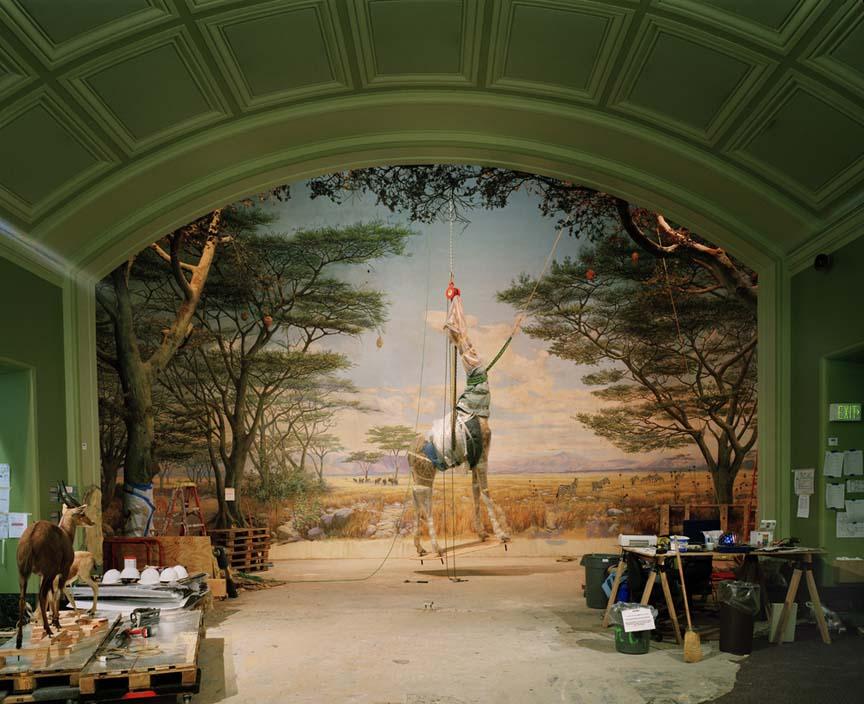 (c) Richard Barnes, Giraffe, 2005, Academy of Sciences
Dead Animals, or the curious
occurrence of taxidermy in contemporary art opens January 23, 2016. David Winton Bell Gallery,
Brown University, Providence, RI.
Until then, explore the macabre side of art and culture at the Morbid Anatomy Museum, in the Gowanus section of Brooklyn, where you can
learn the art and process of taxidermy. Info
If you like this feature and wish to subscribe to DART, go here.