Carla Blumenkrantz
Greenhouse Reps
What the Fire Can’t Burn
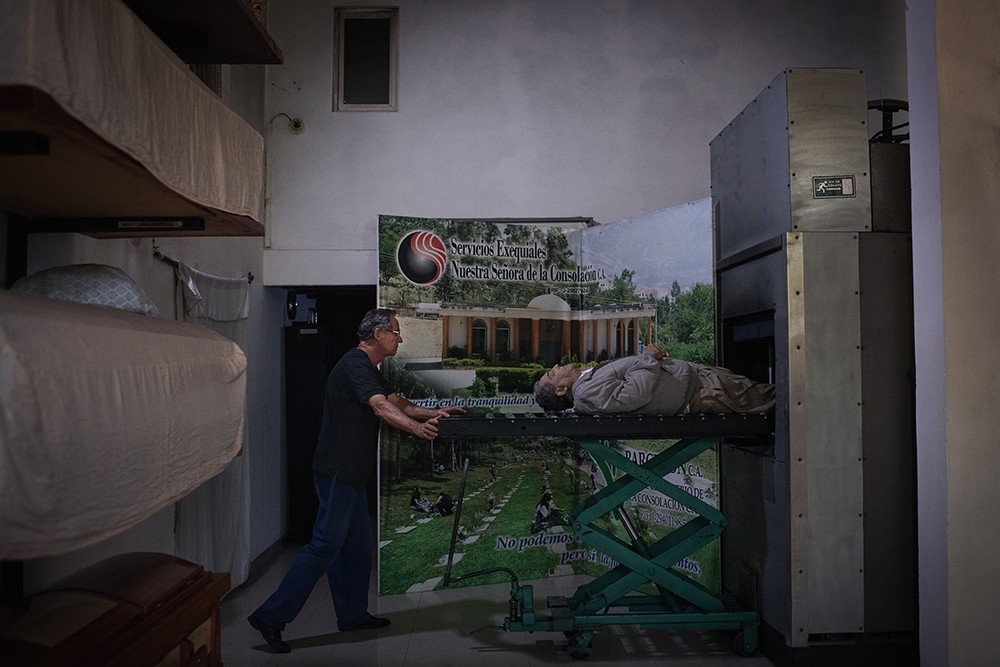
Inside a crematorium in Táchira, Venezuela, my father’s body is pushed into the incinerator. I left Venezuela during the early years of Chávez’s presidency and returned only discreetly, as criticizing the regime was dangerous and trust became fragile. After my last visit, more than sixteen years passed without seeing my father again. Following his sudden death, I made a quiet return to say goodbye. Like many Venezuelans forced abroad, I did not see my parent again until death. This image bears witness to one of countless invisible stories shaped by exile, political collapse, and separation.
My father was an outspoken critic of Chávez long before he came to power. He understood the danger early on and spent decades watching both Venezuela and the successful company he built through hard work slowly deteriorate under the regime. He died six months ago, before seeing the political shift now taking place in Venezuela, but not before casting his final vote for Edmundo González and María Corina Machado in what he believed could be Venezuela’s last chance for change. The fire consumed his body, but not his conviction, his legacy, or his hope for a freer Venezuela.